Explore
Everything AION read, in seven sections. Pick one, a topic or a time window.
 Paper
PaperScaling Agentic Data for Long-Horizon Terminal Intelligence
To address this, we introduce TerminalHorizon, a fully automated data synthesis engine for long-horizon terminal agents.
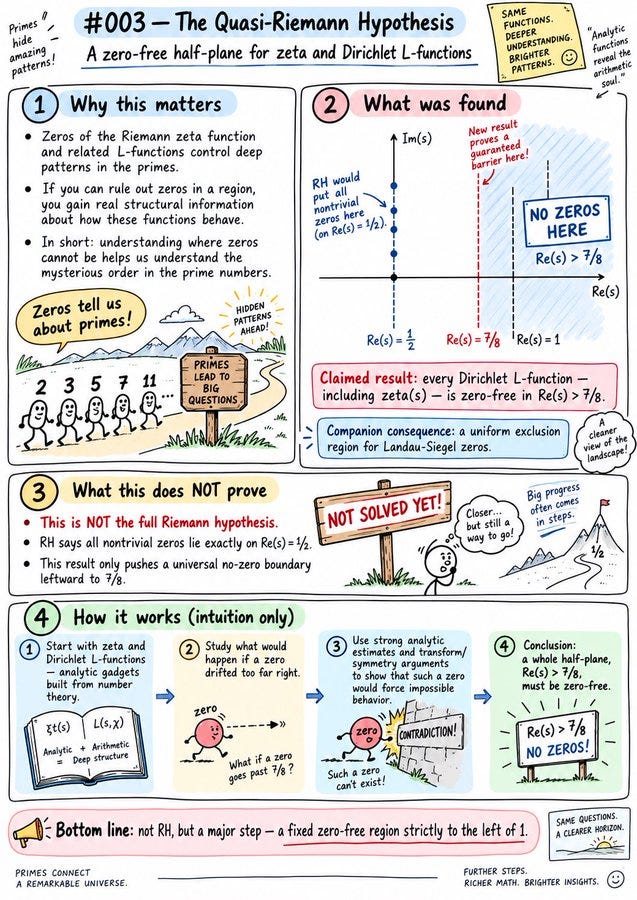
New Math from OpenAI
OpenAI dumped a broad range of huge new mathematical results produced by an internal frontier model.

Launching an opt-in vulnerability-finding service for open-source software
We’re launching OSS Scanner, an opt-in vulnerability scanner for the open-source ecosystem informed by our experience using Claude to find vulnerabilities during Project Glasswing.
Unlocking Earth AI’s planetary geospatial foundation models for global public health
In our latest work, we present five partner-driven case studies demonstrating how this model exemplifies the planetary geospatial foundation model paradigm for global public health.
 Video
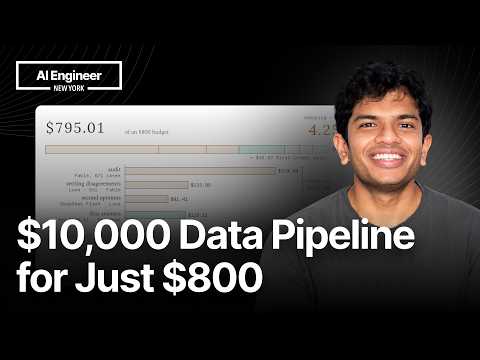
VideoJust-in-Time Ontologies: What Cheap Intelligence Means for Data — Hrishi Olickel, Southbridge AI
Hrishi Olickel uses failures like this to explain why transforming data requires more than a universal schema or a confident agent.
New anime vit tagger
Compared to the original release, a large base anime dataset was used.
Building Reliable Data Analytics Agents: Lessons from the KDD Cup
The NVIDIA KGMON team placed second in the KDD Cup 2026 Data Agents competition with a system built around a simple idea of making an agent's harness smaller,...The NVIDIA KGMON team placed second in the KDD Cup 2026 Data Agents competition with a system built around a simple idea of making an agent’s harness smaller, clearer, and easier to verify.
Are .ipynb notebooks already outdated in the agentic era? [D]
Back then, Jupyter Notebooks were a perfect fit for the classical DS pipeline: EDA -> data prep -> fit -> eval -> tune -> save model artefact and notebook.
Right Number, Wrong State? Measuring Cross-Jurisdiction Substitution in LLM Recall of State Policy
When an LLM answers a state-specific policy question wrongly, it may be hallucinating, or it may be returning a real value that holds in another state.
datasette-atom 0.11a0
A minor fix for compatibility with the latest Datasette alphas.
 Video
VideoWhy Deep Learning Failed on Tables for a Decade - Frank Hutter
Frank Hutter, co-founder of Prior Labs, on why deep learning struggled with tabular data for a decade: tables are messy and heterogeneous, hyped models like TabNet did not generalise to new datasets, and there was no ImageNet of tables.
Making global data easier to explore
Google and the UN system have launched the UN System Data Commons, a new open platform making global statistics accessible and easy to search.
 Paper
PaperWork2Skill: Capturing Human GUI Experience for Reusable Agent Skill Induction
We thus introduce Work2Skill, a framework that captures human GUI experience for reusable agent skill induction.
Incremental Open-Ended Deep Research with Structured Harness
We introduce Incremental Open-Ended Deep Research (Incremental-OEDR), a research setting that treats a report as an evolving research state and incrementally updates it by preserving valid knowledge, revising outdated or incomplete content, and incorporating newly available information.
Open-sourced my image-dataset prep tool — quality scoring, dedupe, leak-safe splits, Kohya export (pure-Python, MIT)
I got tired of rewriting the same dataset-prep scripts before every LoRA/Dreambooth run — resize, dedupe, toss the blurry ones, caption, split — so I cleaned mine up and open-sourced it.
Improving Synthetic Data Generation for Argument Mining via Adversarial Reinforcement Learning
To address this problem, we revisit synthetic data generation for AM from a new perspective and propose a novel adversarial reinforcement learning framework for data synthesis.
Machine Unlearning for Federated Socially Fair k-Means Clustering
Federated clustering can support applications such as patient stratification across hospitals and customer segmentation across distributed financial datasets.
RIFT: Relative Isolation From Trees For Anomaly Detection
Inspired by the geometric interpretation of this formula, we introduce RIFT (Relative Isolation From Trees), a deterministic anomaly detection method that generates the minimum spanning tree and scores each point by the sum of the apparent sizes of tree edges as viewed from that point.
Beyond Distributional Fidelity: Causal-Penalized Diffusion for Synthetic Tabular Data
In this paper, we study whether causal fidelity can be improved directly within a fully generative tabular model.
Efficient Provably Private Classification with a Tabular Foundation Model
Here we introduce PrivTab, an easy to use tabular foundation model for differentially private classification that embeds a privacy mechanism within its architecture.
Federated Bayesian Surveillance of Mechanical Thrombectomy Adverse Events: A Population Risk Layer for Surgical Digital Twins
We propose treating population-scale adverse-event surveillance as a distinct belief layer of the surgical digital twin, and we evaluate a federated Bayesian protocol for learning it under formal privacy guarantees.
How Many Independent Samples Does a Satellite Image Contain? Generalization Bounds for Spatially Dependent Data
Machine learning classifiers for remote sensing imagery are typically evaluated as though every pixel were an independent sample.
Retractions Revisited: A Replication, Extension, and Mechanistic Evaluation of Linguistic Obfuscation Effects in Fraudulent Science
Prior work suggests fraudulent scientists write their articles with higher rates of linguistic obfuscation than genuine scientists, with a possible mechanism suggesting obfuscation makes research more costly for a reader to analyze.
Private and Distributionally Robust Federated Multiclass Classification
To address these limitations, we develop a differentially private, distributionally robust framework for federated multiclass classification that provides sample-level privacy for records stored at each client.
Kernel-based External Validity of Experimental Studies
We formalize the results of a study together with its research question, and define external validity as the probability that two independent and same-sized replications of the study produce results whose maximum mean discrepancy (MMD) is below a given tolerance.
Causal Effect Identifiability in Causal Abstractions: A Strict Hierarchy of Criteria
In this paper, we study causal effect identifiability directly at the level of these graph collections, rather than at the level of individual causal diagrams.
CliQ-RRG: Clinical-Knowledge Guided Disease-aware Visual-Textual Alignment for QA-Style Radiology Report Generation
We present Clinical-Knowledge Guided Disease-aware Visual-Textual Alignment for QA-Style Radiology Report Generation (CliQ-RRG), a unified two-stage framework for interpretable and clinically grounded reporting.
Dataset-Specific Encoding of Image Content Underlies Cross-Dataset Failure in Brain MRI Foundation Models
Frozen features of brain MRI foundation models lose accuracy on new datasets, a failure usually blamed on the features encoding where each scan came from.
DataCupid: Stable Matching Repair for Training Data Acquisition with Delayed Feedback
Matching repair after utility changes can reuse valid observations, but new evaluations must respect matching capacity and may return out of order.
Prediction-Powered Data Fusion for Treatment Effect Estimation
Randomized controlled trials (RCTs) identify treatment effects without confounding but are often small, whereas observational studies (OBS) are large but may be confounded.
OA-MAP: Evidence-Grounded Multi-Agent Multimodal Framework for Interpretable Knee Osteoarthritis Progression
To automate the progression assessment workflow and reduce manual effort while providing interpretable findings and supporting evidence, we present OA-MAP, an autonomous multi-agent framework for evidence-grounded assessment of structural and pain progression in KOA.
Efficient and Generalizable Archetypal Analysis for Discrete Data
Archetypal Analysis (AA) represents observations as convex combinations of extremal data-driven profiles, yielding interpretable low-dimensional descriptions of complex datasets.
Stochastic Grouping Conformal Prediction for Effective Subgroup Reliability
To this end, we propose Stochastic Grouping Conformal Prediction (SGCP), a conformal framework for subgroup-reliable uncertainty quantification.
Interval-valued SHAP in Tree-Based Models
In this paper, we propose an imprecise Dirichlet model (IDM) based method to analyze the robustness of Shapley values in decision trees and random forests.
Low-Cost Sensor Calibration for Indoor Air Quality Monitoring: A Dataset, Evaluation Scenarios, and a Lightweight Model
Low-cost sensors enable scalable indoor air quality monitoring but require calibration because of nonlinear distortions, noise, and temporal drift.
Coefficient Calibration as Selection Pressure in Symbolic Regression
In memetic symbolic regression, candidate structures are compared after coefficient calibration, so the calibration protocol itself contributes to evolutionary selection.
Implementation Guidelines for Data Quality Metrics
Despite decades of data quality (DQ) research, a gap remains between DQ dimensions, such as accuracy or completeness, which the literature defines in textual form, and DQ tools, which typically implement low-level checks that are not aligned with these dimensions.
How Private is Private? A Comparative Study for Face De-Identification
On the metric side, we propose HiFD, a Hierarchical Face De-identification metric that unifies identity suppression, multi-level utility preservation, and image quality under a single consistency-based paradigm: every component is computed from pretrained estimators' outputs on the original face and its de-identified counterpart, directly quantifying how much identity is suppressed and how much downstream-perceivable utility survives.
Robust Decentralized Fairness Auditing
We propose Auditopus, a novel approach for robust decentralized fairness auditing.
Conformal Prediction for Spatially Dependent Data via Sequential Whitening
Split conformal prediction uses prediction errors on held-out (calibration) data to determine how wide the prediction intervals should be.
LLM4Impact: Integrating Heterogeneous Information for Scientific Impact Prediction
In this paper, we present LLM4Impact, an evidence-aware method for scientific impact prediction that learns to represent, integrate, and calibrate heterogeneous information.
Align Before You Combine: Reference Space Calibration for Supervision Without Ground Truth
We introduce a calibration-first framework that produces supervision scores without access to ground-truth labels or a shared annotation space.
Symmetry-Informed Causal Partial Identification
We introduce known data symmetries -- invariance of the causal effect under certain data transformations -- as a new source of constraints to inform PI.
Relative Wasserstein Spatial Depth for Cluster Number Selection in Distributional Data
We propose Relative Wasserstein Spatial Depth (RWSD) as a selection criterion for optimal number of clusters.
When does conformal calibration need censoring weights? Cause-of-failure prediction sets under competing risks
Split conformal prediction sets for competing-risks labels at a fixed horizon require calibration labels that right censoring can leave unobserved.
One-Shot Private Confidence Regions via Resampling
We propose a simple framework for constructing differentially private confidence regions in one shot, i.e., by adding noise only to the final resampling quantile instead of privatizing the estimator computed on each resample.
Cite What You Explore: Budget-Aware LLM Reasoning over Medical KGs with Verifiable Evidence
In this paper, we propose BAR, a Budget-Aware LLM Reasoning framework over medical KGs with three contributions.
New insights from Google’s AI & Economy ATLAS
We’ve translated ATLAS’s millions of global data points into an interactive, open-access experience.