Explore
Everything AION read, in seven sections. Pick one, a topic or a time window.
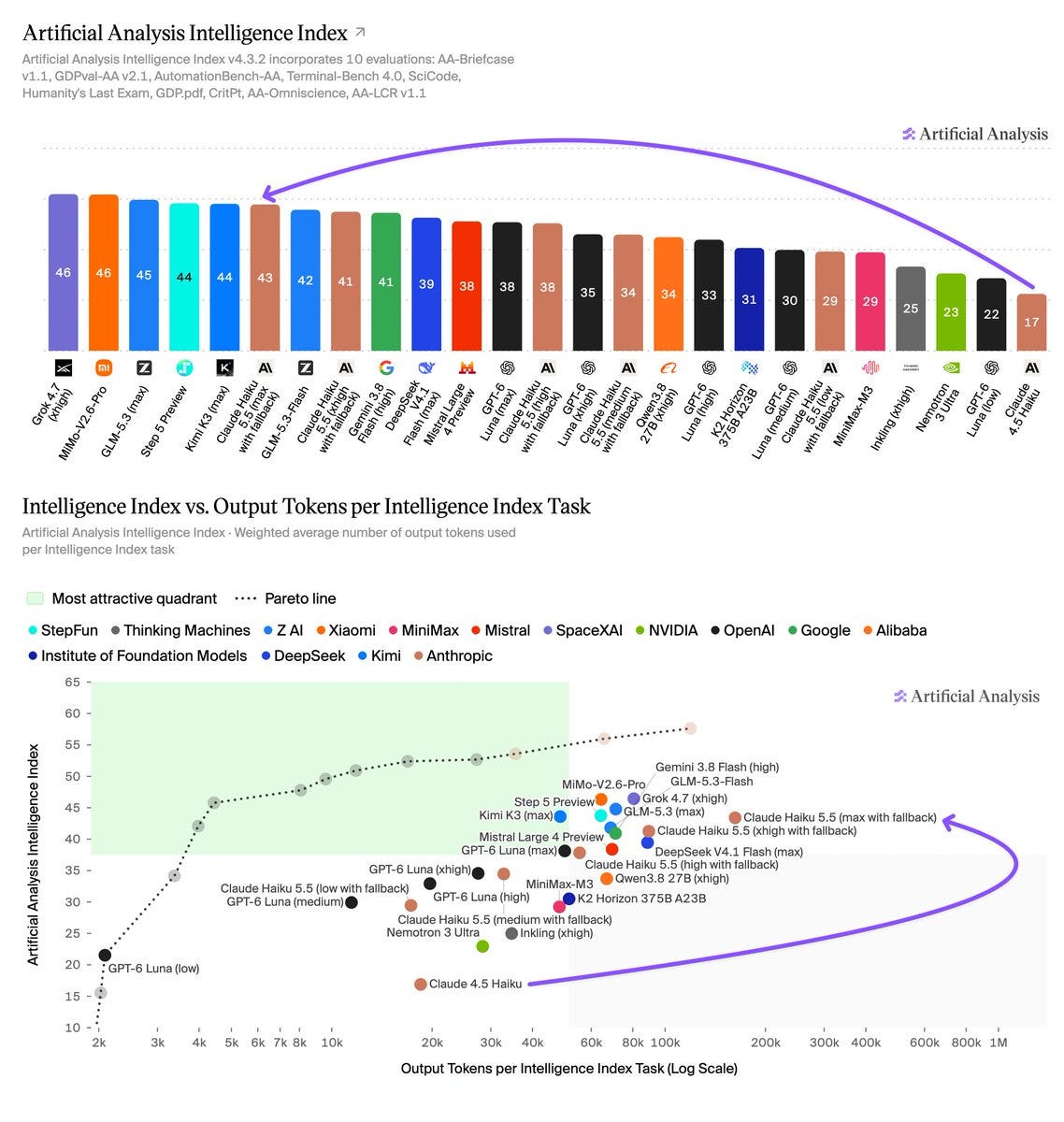
[AINews] Claude Haiku 5.5 — better than GPT-6 Luna at the same pricing
It’s been about a year since Anthropic shipped Haiku 4.5, and with successive launches of Sonnet and Opus and Fable up to 5.5 it was seeming a little forgotten, especially as OpenAI launched Luna 6 alongside Astra and Sol 6.
SparseDecoding: Decoding-Aware Pruning for Accurate and Efficient LLM Inference
The memory-bound nature of the decoding stage of large language model (LLM) inference incurs significant latency.
alesha-pro/Qwen3.8-Flash-Next-abliterated-GSQ-RCO-Strata-GGUF
alesha-pro published the model Qwen3.8-Flash-Next-abliterated-GSQ-RCO-Strata-GGUF on Hugging Face.
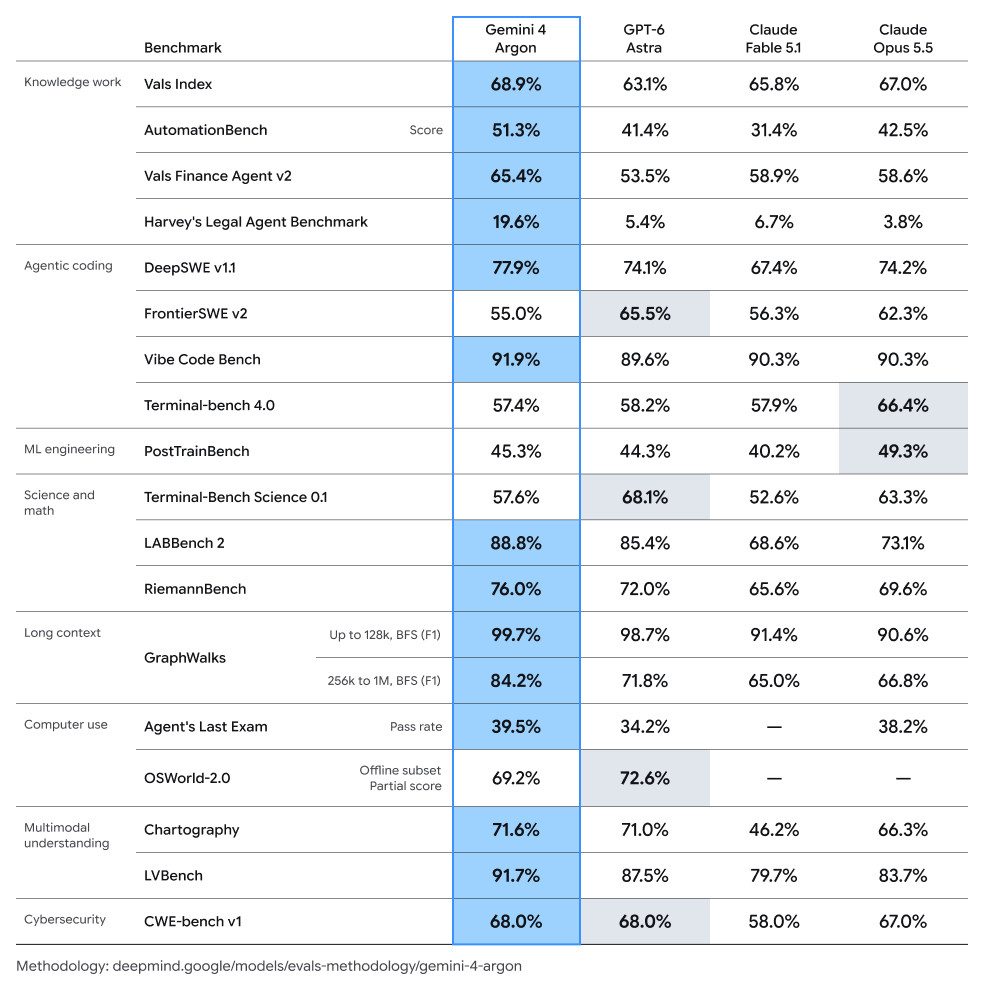
Gemini 4 Argon: our next era of frontier intelligence
Gemini 4 Argon: our next era of frontier intelligence
Scaling Decision Optimization to 100 Million Variables and Beyond with mPDLP in NVIDIA cuOpt
NVIDIA cuOpt GPU-accelerated decision optimization can already deliver speedups of more than 10x over CPU...
 Video
VideoSame Model, Different Speed: Why Your Inference Provider Matters — FriendliAI
Open-weight models are good enough now.
 Video
VideoMicrosoft Joins the Local AI Push
Microsoft is clearly going all in on local AI running on your machine and working with cloud models only when it needs to use them.
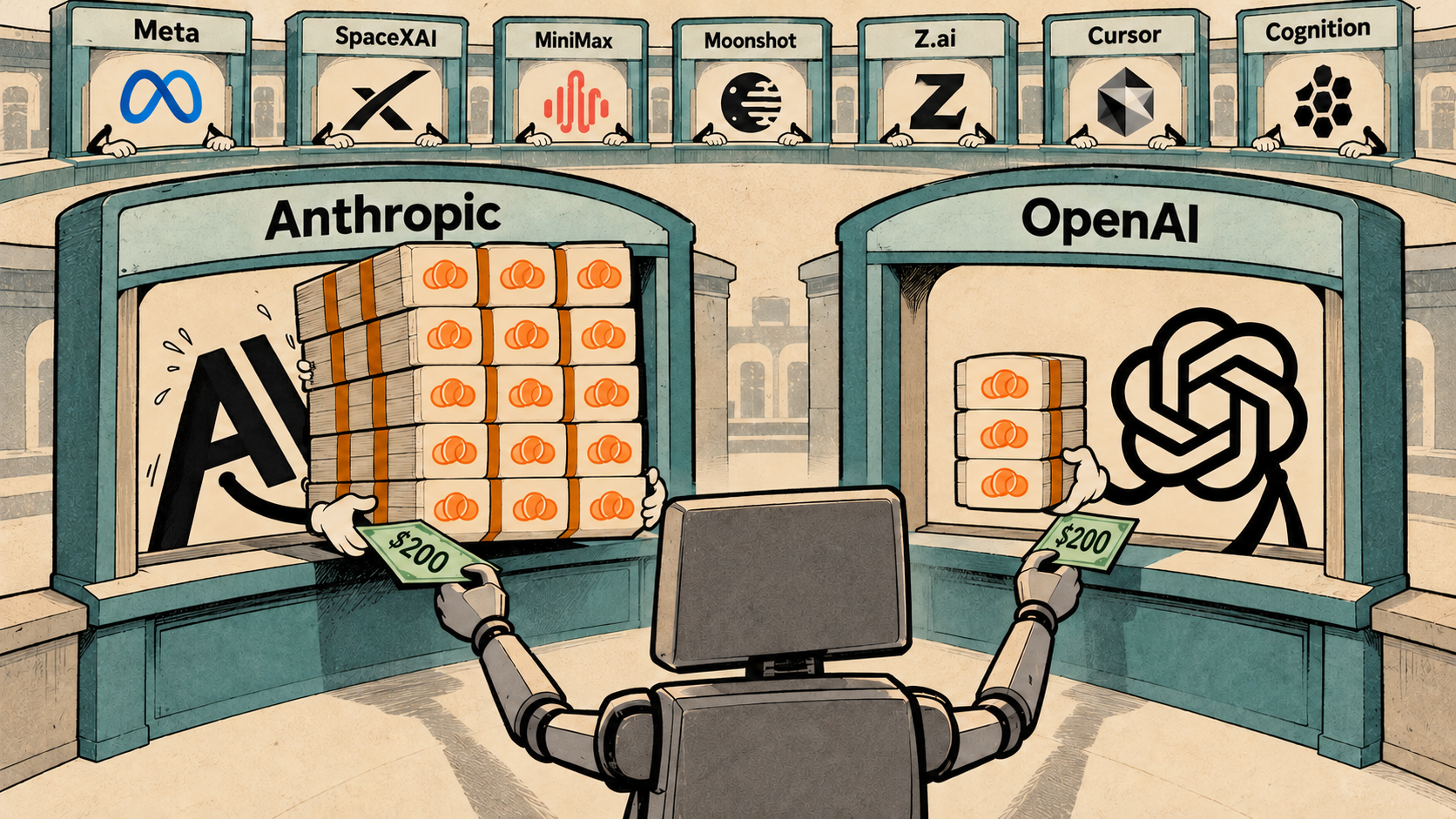
Anthropic Subscriptions Offer 5x+ More Value Than OpenAI
Subscription plans are still the primary way consumers and small businesses pay for AI.
huggingface/trl v1.15.0
SFT, DPO, KTO, GRPO, RLOO and Distillation now score tokens with a fused LM head: a Triton kernel projects the hidden states through the LM head in tiles and reduces to per-token log-probs and entropy directly, so the [batch, seq, vocab] logits tensor is never built.
Expanding our enterprise inference capacity with IBM Cloud and NVIDIA
Enterprises can now run open models at production scale on a dedicated B300 inference cluster, built by Together AI, IBM Cloud, and NVIDIA
 Video
VideoWhy DeepSeek Wants AI To Forget
📝 The DeepSeek OCR paper is available here:

A/B Blind Taste Test - Krea2-Turbo vs. Qwen-Image 2.1 Turbo
Since Qwen 2.1 Turbo dropped suddenly right after my last taste test, figured might as well do one for it as well.
I ran Qwen 3.8 Flash-Next on my AMD 7900 XTX at 500k context. All local and what a shift it has been.
I was running Qwen3.8-Flash-Next (base and later Swift-1.5 NVFP4) on a paid pod seat for about a month, and it started answering with short strings that echoed its own earlier reasoning.
New agent skill: Amazon SageMaker optimized generative AI inference for your coding agent
Today, Amazon SageMaker AI optimized generative AI inference introduces the aws-ai-ml skill, available through the Agent Toolkit for AWS.
BerriAI/litellm v1.105.0
Verify using the pinned commit hash (recommended):
unslothai/unsloth v0.1.905-beta: Sandboxing is here!
We're introducing Windows, Mac and Linux sandboxing in Unsloth!
vllm-project/vllm v0.31.0
Fast restart: the new vllm preload CLI launches the weight-cache daemon that keeps post-quantized weights resident in GPU memory across engine restarts (#56680), now with data parallelism (#57386), MTP draft models (#57312), a /health endpoint (#58552) and a readiness wait (#58370).
Cache the Encoder Within:Compact, Reusable Memory across LLM Queries
Repeated queries over shared documents incur redundant encoding, while caching model states introduces persistent storage costs.

[AINews] not much happened today
AINews’ website lets you search all past issues.
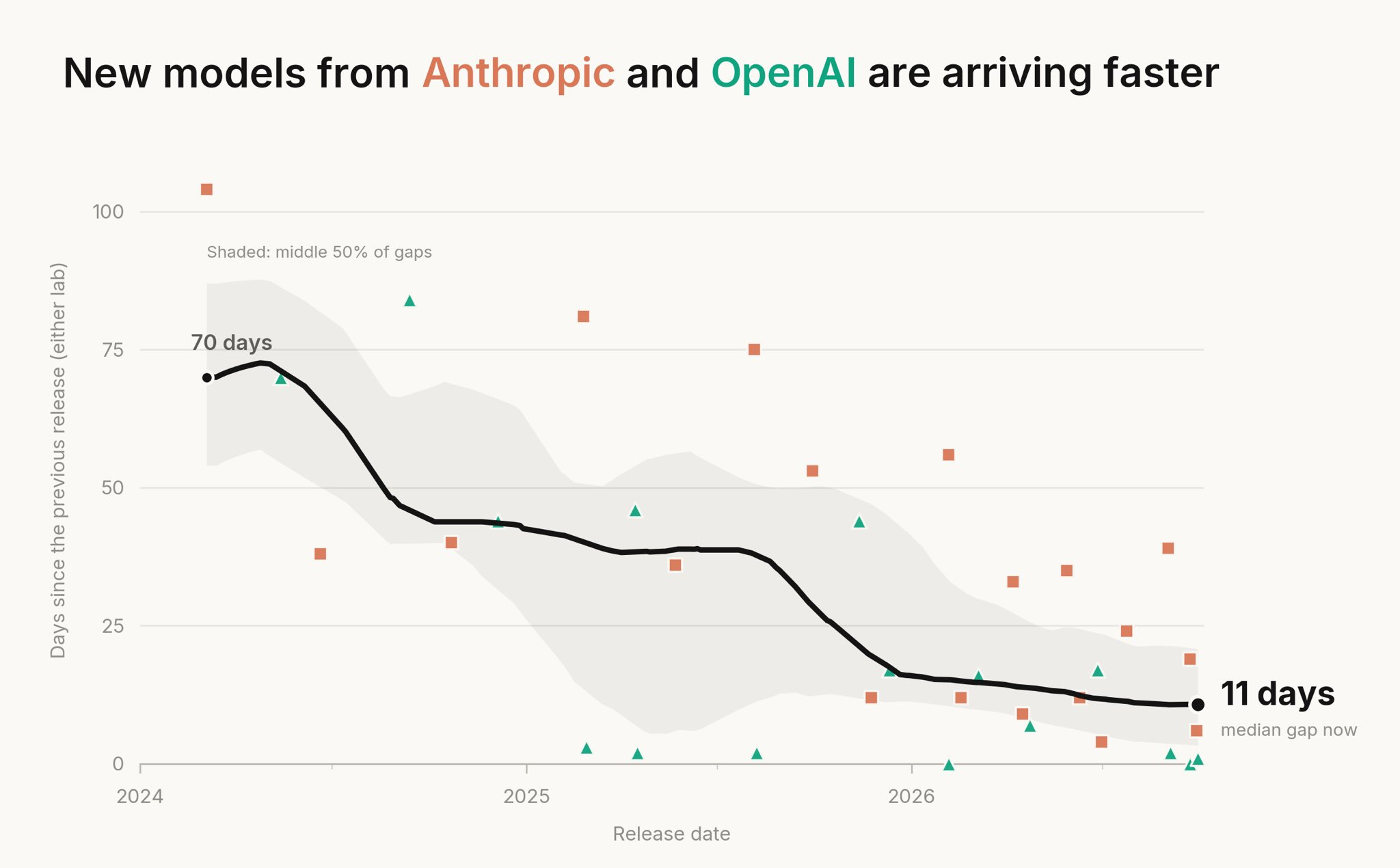
Last Week in AI #345 - 5 new models, 9 misalignment incidents, some Dots
Anthropic and OpenAI race to release smarter and cheaper models

Cut your AI spend with AI Gateway's Auto Router
Today, we are releasing Cloudflare's Auto Router in public beta, available through AI Gateway.
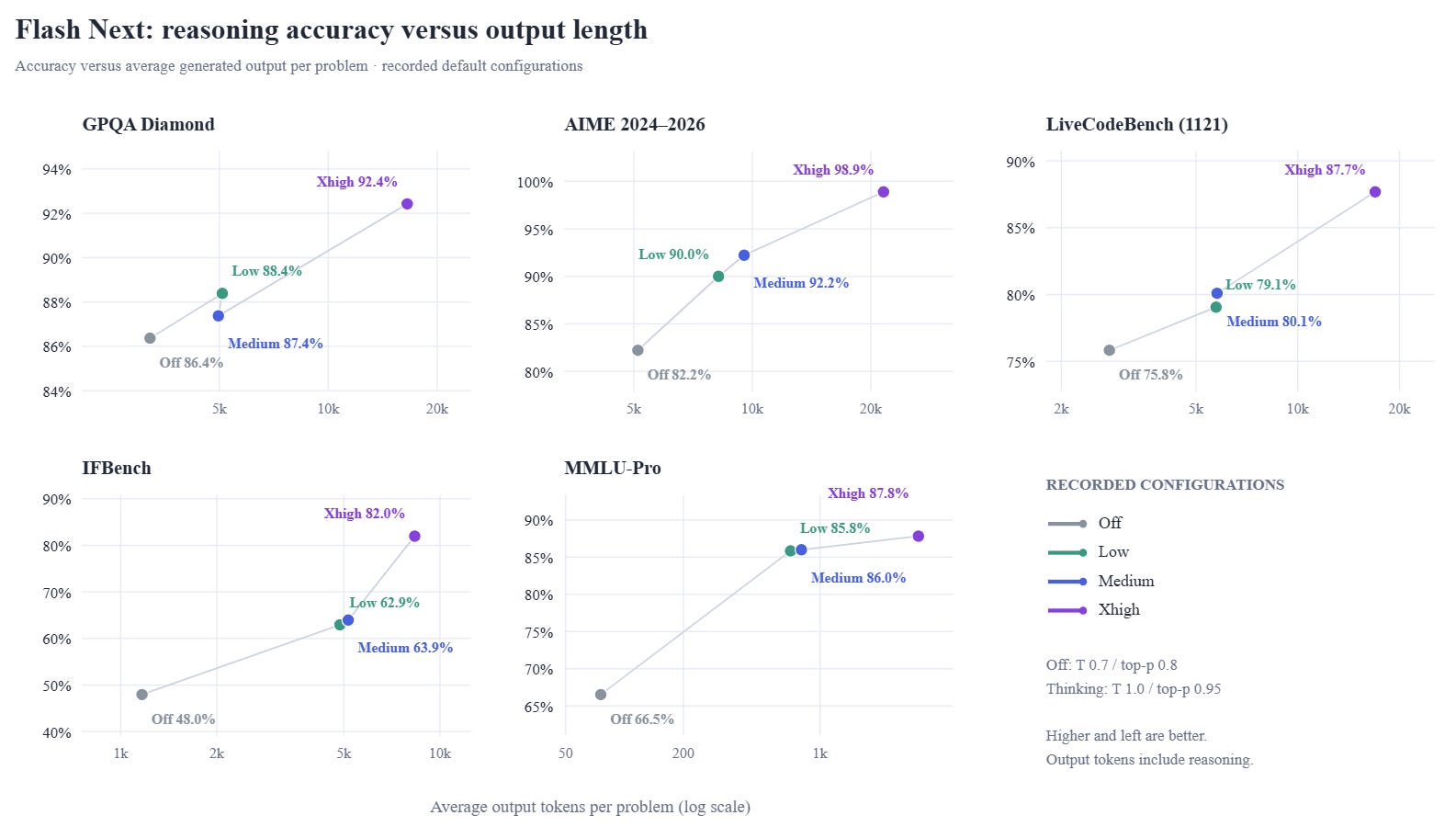
Qwen3.8 Flash Next Reasoning Modes: Off vs Low vs Medium vs Xhigh
Like Qwen3.8 27B, Qwen3.8 Flash Next has three reasoning efforts: low, medium, and xhigh.
pydantic/pydantic-ai clai2-bleeding: CLAI2 bleeding
Sdists rebuilt from main for /update on the CLAI bleeding channel.
NVIDIA/TensorRT-LLM v1.3.0rc29
Expose Nemotron-H vision-language LoRA configuration for supported inference paths #19151
pytorch/pytorch v2.14.1: PyTorch 2.14.1 Release
This release is meant to fix the following regressions and silent correctness issues:
axolotl-ai-cloud/axolotl v0.20.0
We have added a bunch of features including GGUF export, Ringmaster context parallelism, native NVFP4 LoRA, and expert parallelism without DeepEP.
How Diffusion Controller unifies and simplifies AI image generation
We introduce Diffusion Controller, a lightweight "steering damper" network that precisely steers image generation to achieve significantly better prompt alignment.
ollama/ollama v0.34.4
Qwen 3.8 prompt processing is faster on Apple Silicon.
One Block, Multiple Depths: Recurrent Vision Transformers with Depth-Programmed Experts
In this work, we show that a single Transformer block, applied recurrently, can match the accuracy of a full-depth vision encoder at comparable inference FLOPs without intermediate feature distillation. reViT restores depth-specific transformations by representing the FFN at each recurrent depth as a convex combination of a small shared expert bank.
SpatialOPSD: Self-Distilling Spatial Intelligence from Verified Coding Agent Traces
Spatial coding agents significantly improve spatial reasoning in Multimodal Large Language Models (MLLMs) by using external tools to generate verified execution traces.
TokenRouter: Efficient Serving System for Token-Level LLM Routing
Large language model (LLM) routing distributes inference work across different models, advancing the cost-quality Pareto frontier of LLM serving.
A Closer Look at Agentic BBO: Benchmarking LLM Agents for Black-Box Optimization
We therefore introduce AgenticBBO-Bench, a cross-domain benchmark for agentic BBO spanning synthetic functions, hyperparameter optimization, database tuning, chip design, and molecular design under a unified finite-budget evaluation protocol.
V-CoLA: Vision Token Compression with Linear Attention
To this end, we propose V-CoLA, an efficient training-free token compression framework specifically designed for linear attention.
Composing What Each Teacher Learned: Multi-Teacher On-Policy Distillation through Teacher-Relative Shifts
We introduce Δ-MOPD, which transfers each teacher's teacher-minus-base logit shift re-anchored at the student's frozen initialization, and compare it with endpoint supervision in both settings while holding teacher selection fixed.
Real Long-Term Memory for AI: A 50-Million-Token Window That Is Faster and Cheaper Than Recompute
We test a memory layer, the public package galahad-kv, that saves the KV state of each block of about 16,000 tokens to encrypted local NVMe disk and loads it back later, byte-exact, without recomputing it.
Scaling to Tens of Thousands of Test-Time Iterations with Loop-Native Attention Residuals
In this paper, we introduce InfiLoop, a loop-native residual connection that learns which past computations to retain and how much to accept from each new update.
Quoting Felix Rieseberg
The "old" version of Cowork runs model inference in the cloud, executing tool calls in an Anthropic-provided VM we shipped to your computer.
CARE: Certifying Acceleration for Vision-Language-Action Inference
Prior work accelerates VLA inference using techniques like action chunking and visual-token pruning, typically evaluating based on latency and average task success.
 Video
VideoAgents That Own Their Inference — Du'an Lightfoot & Khaja Omer, Akamai Technologies
Speculative decoding drops a demo model from roughly 58 tokens per second to 16 instead of speeding it up.
The Lattice of Transition Laws
Diffusion and autoregression (AR) have long been seen as different categories of generative models, with diffusion specialising in continuous fields and AR specialising in discrete tokens.
MC-Sparse: Deconstructing and Closing the Dense-Sparse Attention Gap in Diffusion Transformers
Sparse attention is a primary approach to reducing the latency of diffusion transformers in long-sequence generation tasks, such as video and high-resolution 3D asset generation.

I tested different Qwen 3.8 27B quants
There is a lot of discussion which quant to use.
Every Model That Can Be Run On 10-16GB VRAM Ranked
It's been 4 years since c.ai first hallucination model, and yet, we're nowhere good enough at LLMs in terms of spontaneity/interesting hallucination features.
Opera: A Verbal Critic Framework for Long-horizon Coding Agents
We present Opera, a verbal critic framework that treats each correction as a persistent note, followed until the diagnosed problem is resolved.
UPDATE: Qwen 3.8 27B 140 tok/s on single RTX 3090 Megakernel: KL divergence 0.0009 vs llama.cpp
RECAP: The megakernel is a CUDA engine for Qwen3.8-27B that runs 1.4-1.9x faster than llama.cpp on a single 3090.
Qwen 3.8 27B Q5 vs Qwen 3.8 Next Q3_S for document analysis
So far I've been using Qwen 3.8 27B Q5 with a 150K context window, but I'm wondering whether I should switch to Qwen 3.8 Next Q3S, since it has much more knowledge and could extract data much better than the 27B.
Converting dense models into Mixture-of-Experts
For the past few weeks I've been trying out converting existing dense models to sparse Mixture-of-Experts models, with no pretraining from scratch.
Incremental Open-Ended Deep Research with Structured Harness
We introduce Incremental Open-Ended Deep Research (Incremental-OEDR), a research setting that treats a report as an evolving research state and incrementally updates it by preserving valid knowledge, revising outdated or incomplete content, and incorporating newly available information.