Explore
Everything AION read, in seven sections. Pick one, a topic or a time window.
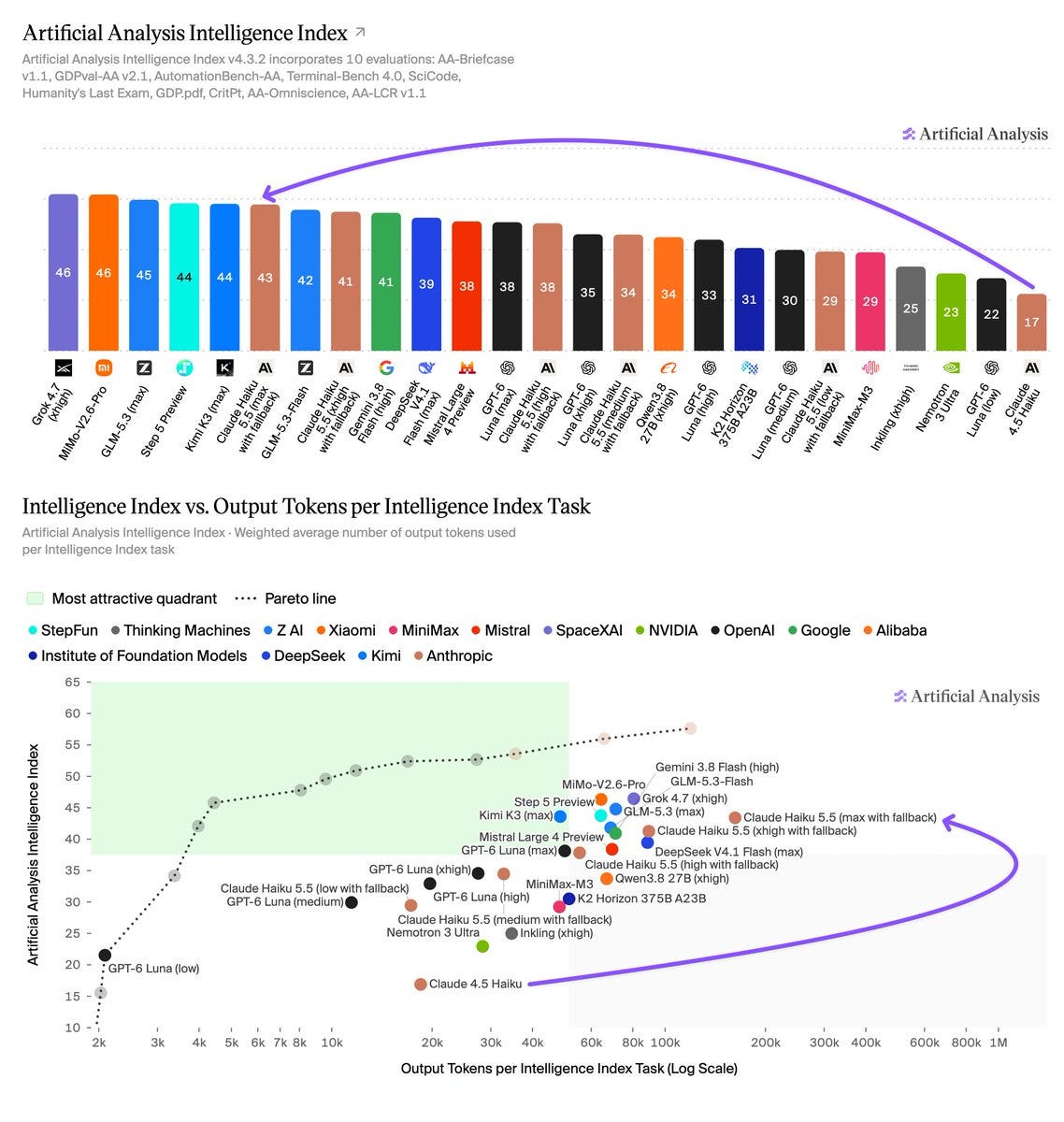
[AINews] Claude Haiku 5.5 — better than GPT-6 Luna at the same pricing
It’s been about a year since Anthropic shipped Haiku 4.5, and with successive launches of Sonnet and Opus and Fable up to 5.5 it was seeming a little forgotten, especially as OpenAI launched Luna 6 alongside Astra and Sol 6.
 Video
VideoSame Model, Different Speed: Why Your Inference Provider Matters — FriendliAI
Open-weight models are good enough now.
 Video
VideoWhy DeepSeek Wants AI To Forget
📝 The DeepSeek OCR paper is available here:
Every Model That Can Be Run On 10-16GB VRAM Ranked
It's been 4 years since c.ai first hallucination model, and yet, we're nowhere good enough at LLMs in terms of spontaneity/interesting hallucination features.
BerriAI/litellm v1.105.0
Verify using the pinned commit hash (recommended):
One Block, Multiple Depths: Recurrent Vision Transformers with Depth-Programmed Experts
In this work, we show that a single Transformer block, applied recurrently, can match the accuracy of a full-depth vision encoder at comparable inference FLOPs without intermediate feature distillation. reViT restores depth-specific transformations by representing the FFN at each recurrent depth as a convex combination of a small shared expert bank.

[AINews] TypeSafe/Jev at >$100M ARR, $7.5B valuation 3 weeks after launch
As you can see in the AINews X recap section below, everyone on earth has cloned the Jev API, but only one company can ever create the category.
huggingface/trl v1.15.0
SFT, DPO, KTO, GRPO, RLOO and Distillation now score tokens with a fused LM head: a Triton kernel projects the hidden states through the LM head in tiles and reduces to per-token log-probs and entropy directly, so the [batch, seq, vocab] logits tensor is never built.
 Video
VideoMicrosoft Joins the Local AI Push
Microsoft is clearly going all in on local AI running on your machine and working with cloud models only when it needs to use them.
Scaling Decision Optimization to 100 Million Variables and Beyond with mPDLP in NVIDIA cuOpt
NVIDIA cuOpt GPU-accelerated decision optimization can already deliver speedups of more than 10x over CPU...
unslothai/unsloth v0.1.905-beta: Sandboxing is here!
We're introducing Windows, Mac and Linux sandboxing in Unsloth!
Pay-per-inference for AI agents: How BlockRun and Incarna use Amazon Bedrock AgentCore payments
In this post, we look at how Incarna used AgentCore payments to let its agents pay BlockRun for model inference one request at a time.
asdex: Automatic Sparse Differentiation in JAX
Automatic sparse differentiation (ASD) exploits this structure in four steps: detection of the input-agnostic sparsity pattern, coloring of a graph to group columns or rows that can share an AD pass, compressed differentiation to compute a compressed derivative matrix with one AD pass per color, and finally decompression into the original sparsity pattern.
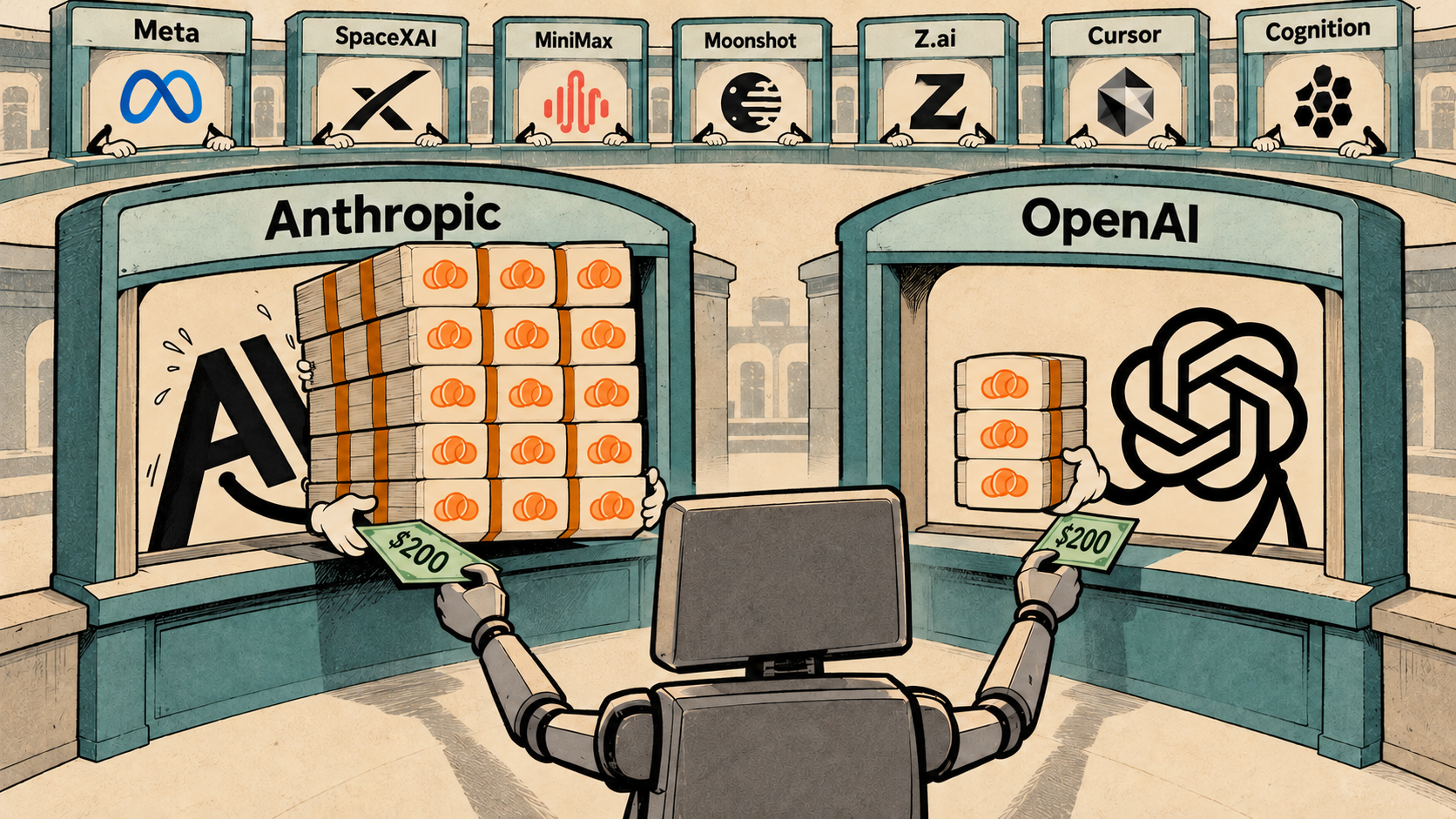
Anthropic Subscriptions Offer 5x+ More Value Than OpenAI
Subscription plans are still the primary way consumers and small businesses pay for AI.
Expanding our enterprise inference capacity with IBM Cloud and NVIDIA
Enterprises can now run open models at production scale on a dedicated B300 inference cluster, built by Together AI, IBM Cloud, and NVIDIA
vllm-project/vllm v0.31.0
Fast restart: the new vllm preload CLI launches the weight-cache daemon that keeps post-quantized weights resident in GPU memory across engine restarts (#56680), now with data parallelism (#57386), MTP draft models (#57312), a /health endpoint (#58552) and a readiness wait (#58370).
Mia-AiLab/GLM-5.3-Flash-EXL3-4bpw-TensorFold-Ablit
Mia-AiLab published the model GLM-5.3-Flash-EXL3-4bpw-TensorFold-Ablit on Hugging Face.
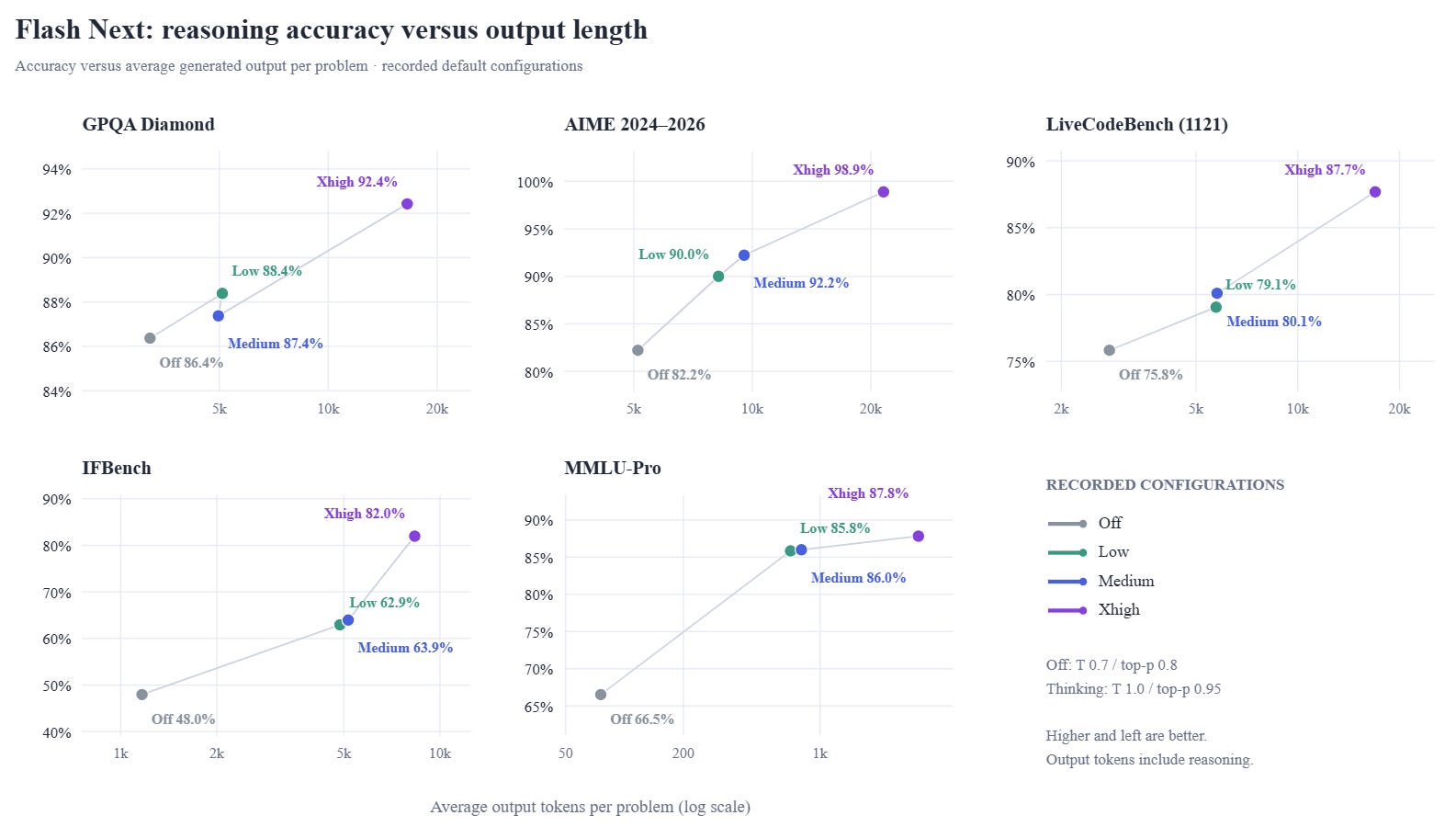
Qwen3.8 Flash Next Reasoning Modes: Off vs Low vs Medium vs Xhigh
Like Qwen3.8 27B, Qwen3.8 Flash Next has three reasoning efforts: low, medium, and xhigh.
pydantic/pydantic-ai clai2-bleeding: CLAI2 bleeding
Sdists rebuilt from main for /update on the CLAI bleeding channel.
 Video
VideoAgents That Own Their Inference — Du'an Lightfoot & Khaja Omer, Akamai Technologies
Speculative decoding drops a demo model from roughly 58 tokens per second to 16 instead of speeding it up.
UPDATE: Qwen 3.8 27B 140 tok/s on single RTX 3090 Megakernel: KL divergence 0.0009 vs llama.cpp
RECAP: The megakernel is a CUDA engine for Qwen3.8-27B that runs 1.4-1.9x faster than llama.cpp on a single 3090.
Qwen 3.8 27B Q5 vs Qwen 3.8 Next Q3_S for document analysis
So far I've been using Qwen 3.8 27B Q5 with a 150K context window, but I'm wondering whether I should switch to Qwen 3.8 Next Q3S, since it has much more knowledge and could extract data much better than the 27B.
Converting dense models into Mixture-of-Experts
For the past few weeks I've been trying out converting existing dense models to sparse Mixture-of-Experts models, with no pretraining from scratch.
Running Next Flash IQ3_XXS at ~70 tok/s with 100k context or 2 instances of Qwen 3.6 35B A3B IQ4 at ~145 tok/s with 256k all on $500 of ex mining BC-250 boards
This will be my third update on the bc-250 cluster and for my first forray into local ai I have been having a blast.
I trained a 102M recursive BitNet-v2 model from scratch: 64K context, trained on less than 5B tokens
Hiya, I’m releasing Recursive BitNet N-Gram 102M, a small experiment combining ternary weights, shared transformer layers, and hashed n-gram embeddings, trained with a whooping budget of 100€
Building a 4x R9700 setup for a 10 person startup
Just wanted to share a build I am doing for a client.
OMG! If you have a Mac with 64GB, try Qwen3.8-Flash-Next-oQ4e-mtp with oMLX!
I was able to run Qwen3.8-Flash-Next-oQ4e-mtp on M3Max 64GB with oMLX!
Engineer / developer observations of Gemma4-31B, Qwen3.8-27B, and 6.1-Sol for software engineering work
Models: Gemma4-31B vs Qwen3.8-27B at the same quantization (an Unsloth flavor of Q4).
Is anyone running Qwen3.8 Flash Next with a 1M context?
So, while doing a search to read the model card again, and because I didn't memorize the huggingface URL, I saw an AI "answer" at the top of the search, stating that while it natively supports a ~244k context, it could go to 1M using YaRN.
48Gb VRAM speed AND quality ! (Qwen 3.8 27B Swift 1.5 W8A16)
Because sometimes you need both speed AND quality, I made my own Qwen 3.8 27B Swift 1.5 quant.
SparseDecoding: Decoding-Aware Pruning for Accurate and Efficient LLM Inference
The memory-bound nature of the decoding stage of large language model (LLM) inference incurs significant latency.
Qwen3.8-27B on a single 3090: 140 tok/s on code with a custom megakernel
I've been using Claude Opus 5.5 to speed up Qwen3.8-27B on my PC (rtx 3090), it wrote a CUDA megakernel that is 1.4-1.9x faster than llama.cpp depending on the task/context length.
Strata with Qwen3.8 Flash Next UD-Q4_K_XL
Most of the benchmarks I've seen are using IQ2 or IQ3 quants, so I wanted to see how Unsloth's UD-Q4KXL performs instead.
TokenRouter: Efficient Serving System for Token-Level LLM Routing
Large language model (LLM) routing distributes inference work across different models, advancing the cost-quality Pareto frontier of LLM serving.
A Closer Look at Agentic BBO: Benchmarking LLM Agents for Black-Box Optimization
We therefore introduce AgenticBBO-Bench, a cross-domain benchmark for agentic BBO spanning synthetic functions, hyperparameter optimization, database tuning, chip design, and molecular design under a unified finite-budget evaluation protocol.
Is there a better option than llama.cpp for 4GB VRAM for Higher tokens/sec?
I want something that utilizes my system resources more efficiently—for instance, by managing my RTX with 4GB VRAM more intelligently—and delivers higher tokens-per-second, all without the burden of heavy dependencies like PyTorch.
SpatialOPSD: Self-Distilling Spatial Intelligence from Verified Coding Agent Traces
Spatial coding agents significantly improve spatial reasoning in Multimodal Large Language Models (MLLMs) by using external tools to generate verified execution traces.
V-CoLA: Vision Token Compression with Linear Attention
To this end, we propose V-CoLA, an efficient training-free token compression framework specifically designed for linear attention.
Scaling to Tens of Thousands of Test-Time Iterations with Loop-Native Attention Residuals
In this paper, we introduce InfiLoop, a loop-native residual connection that learns which past computations to retain and how much to accept from each new update.
Composing What Each Teacher Learned: Multi-Teacher On-Policy Distillation through Teacher-Relative Shifts
We introduce Δ-MOPD, which transfers each teacher's teacher-minus-base logit shift re-anchored at the student's frozen initialization, and compare it with endpoint supervision in both settings while holding teacher selection fixed.
Real Long-Term Memory for AI: A 50-Million-Token Window That Is Faster and Cheaper Than Recompute
We test a memory layer, the public package galahad-kv, that saves the KV state of each block of about 16,000 tokens to encrypted local NVMe disk and loads it back later, byte-exact, without recomputing it.
The Lattice of Transition Laws
Diffusion and autoregression (AR) have long been seen as different categories of generative models, with diffusion specialising in continuous fields and AR specialising in discrete tokens.
Incremental Open-Ended Deep Research with Structured Harness
We introduce Incremental Open-Ended Deep Research (Incremental-OEDR), a research setting that treats a report as an evolving research state and incrementally updates it by preserving valid knowledge, revising outdated or incomplete content, and incorporating newly available information.
Opera: A Verbal Critic Framework for Long-horizon Coding Agents
We present Opera, a verbal critic framework that treats each correction as a persistent note, followed until the diagnosed problem is resolved.
Rounding in Preconditioner Space: Redesigning 4-bit AdamW Optimizer-State Quantization
Quantizing AdamW's optimizer states reduces persistent storage, but quantization errors propagate through the moment recurrences and perturb subsequent adaptive updates.
Synthesis Superintelligence: from Semiconductors to Superconductors — Periodic Labs’ Liam Fedus and Ekin Dogus Cubuk
We go deep on Periodic’s vision for “synthesis superintelligence”: reinforcement learning grounded in physical experiments, AI-powered materials characterization, simulations and density functional theory, high-throughput labs, and systems that learn from the entire process of doing science rather than only its published results.
From Chain-of-Thought to Loops: Non-Autoregressive Latent Reasoning via Looped Transformers
We introduce LLoCoT: a looped latent-reasoning framework that replaces left-to-right latent generation with iterative refinement of a compact latent workspace.
Building Reliable Data Analytics Agents: Lessons from the KDD Cup
The NVIDIA KGMON team placed second in the KDD Cup 2026 Data Agents competition with a system built around a simple idea of making an agent's harness smaller,...The NVIDIA KGMON team placed second in the KDD Cup 2026 Data Agents competition with a system built around a simple idea of making an agent’s harness smaller, clearer, and easier to verify.