Explore
Everything AION read, in seven sections. Pick one, a topic or a time window.
LEGO: A Lifting-Free Approach for Exocentric-to-Egocentric Video Generation
Generating an egocentric video from a single exocentric recording is a challenging case of novel view synthesis, as the two cameras share little overlap and much of the target view is unobserved.
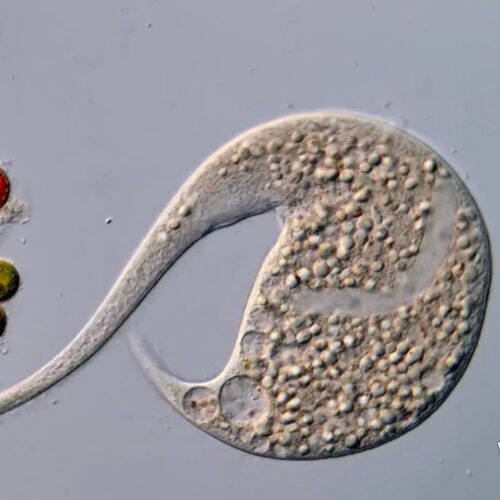
AI disqualification yields new Nikon Small World in Motion winner
Last month we covered the winner of Nikon's Small World in Motion video: Ning Xu of Tsinghua University in China, whose video captured tiny cilia beating in the airways of a child with a rare respiratory disorder.
MCL: Meta Convolution Layer
Dynamic convolution enhances convolutional neural networks (CNNs) by adapting kernels to input content, but it expresses the effective kernel as a linear mixture of a small number of basis kernels, which limits expressivity and complicates optimization as the mixture size grows.
 Paper
PaperNormalizing Trajectory Models
We introduce Normalizing Trajectory Models (NTM), which models each reverse step as an expressive conditional normalizing flow with exact likelihood training.
LiquidAI/d1-omni-600M
LiquidAI published the model d1-omni-600M on Hugging Face.
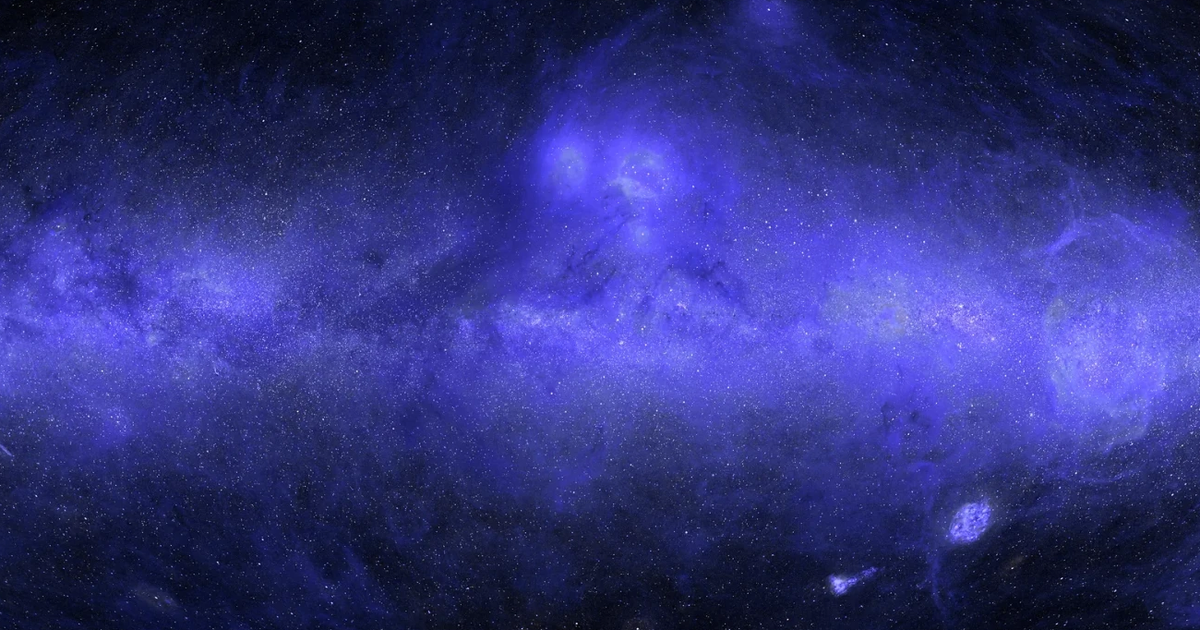
The missing map of the sky
Here, Brice Ménard, an astrophysicist at Johns Hopkins University and a researcher at Anthropic, explains how he worked with Claude Science to produce the first complete map of the sky in UV light.
Quoting Ben Affleck
And a tensor, you use a convolutional neural network to identify patterns in that that would reveal what's called edge detection or feature extraction, which is just identifying patterns enough to know like this is where the window ledge is, so we can more easily take the green screen image out and replace it with something.
One Block, Multiple Depths: Recurrent Vision Transformers with Depth-Programmed Experts
In this work, we show that a single Transformer block, applied recurrently, can match the accuracy of a full-depth vision encoder at comparable inference FLOPs without intermediate feature distillation. reViT restores depth-specific transformations by representing the FFN at each recurrent depth as a convex combination of a small shared expert bank.
OuroWorld: Bringing Any 3D World Alive as Diverse, Endlessly Looping 3D Cinemagraphs
OuroWorld is a mask-free framework that turns any static 3D Gaussian Splatting scene into a 3D cinemagraph: a dynamic scene with vivid, diverse motion looping seamlessly from any viewpoint.
Beyond Spatio-Temporal Priors: A Generalizable Approach for Dense Correspondence Matching
To establish identity-preserving correspondence across such transformations, we introduce FreeMatching, a generalizable framework combining generative and semantic foundation representations with heterogeneous supervision from classical datasets, tracked videos, and synthetic scenes.
Pumpire: Unified Benchmark for Metric Distance Estimation
We present Pumpire, a unified benchmark for evaluating metric point-pair distance estimation capability of both image- and video-level 3D foundation models, with or without depth priors.
Iris-3B: Going Beyond the Latent with Pixel-Space Diffusion Training, Conversion and Fine-Tuning
Pixel-space diffusion models avoid the lossy VAE of latent models, which suggests an advantage on downstream tasks where fine-grained detail matters.
Predicting Cable Dynamics with Physical Attention Bias
Learned simulators for deformable linear objects (DLOs) such as cables have to predict the motion of cables they were not trained on and stay stable over long rollouts.
Rubric-CEPR: Self-Evolving Image Editing via Reward-Verified Self-Distillation
To this end, we propose a self-evolving framework, named Rubric-CEPR, that verifies the editor's own samples with its internal representations through a rubric-augmented Contrastive Edit-Preservation Reward (CEPR).
Dissecting Representation Structure in Vision Transformers: A Rigorous Architectural Study
Representation structure is crucial for understanding Vision Transformer (ViT) architectures and their generalization behavior.
GLIO2: A GPU-Parallelized Tightly-Coupled LiDAR-Inertial-GNSS System for Robust and Real-Time Global Localization and Mapping
We propose GLIO2, a tightly-coupled LiDAR-Inertial-GNSS system whose GPU-parallel front-end jointly optimizes scan-to-multiscan LiDAR, IMU pre-integration, and raw GNSS measurements in a single sliding-window factor graph, sustaining real-time operation on edge hardware.
From Pixels to Structure: Lightweight Vision-Language Models for Document OCR and Structured JSON Extraction
We present a comparative study of eight open-source lightweight VLMs (up to 7B parameters) for Optical Character Recognition (OCR)-to-structure across three university heritage collections.
Dual- versus Single-Suggestion AI Support for Radiographic Interpretation in Residents: Randomized Multireader Study
Purpose: To compare dual- and single-suggestion AI support for radiographic interpretation by residents, particularly when the shared AI suggestion was incorrect.
EchoDiST: Self-distillation-based joint learning for diffusion-conditioned echocardiographic myocardial motion estimation
We propose EchoDiST, a framework for unsupervised echocardiographic myocardial motion estimation that integrates self-distillation-based joint learning with a diffusion-conditioned motion estimation network.
GroundSight at GroundLM 2026 Shared Tasks: GoldenViewVQA
We present CoVeR-VQA, a training-free multi-stage verification and correction framework for grounded multi-view VQA.
On the Necessity of Attention-FFN Split in Vision Transformers
In this work, we investigate the necessity of the Attention-FFN dichotomy in Vision Transformers (ViTs).
The Operator Mismatch Problem: Deploying BEV Perception with Portable GPU Compute
We present BEVPIPE, a framework for deploying multimodal BEV perception pipelines using portable GPU compute APIs and integrating them with production inference runtimes.
CARE: Constrained Attention Refinement for Fine-Grained Visual Classification via Teacher-Student Distillation
To address this problem, we propose CARE, a constrained attention refinement framework for interpretable fine-grained recognition via teacher-student distillation.
AI-Based On-Board Maritime Object Detection for Earth Observation Payload Data Reduction on Versal Embedded Hardware
We study onboard vessel detection as a way to select what is downlinked, which reduces the data according to its content rather than coding every pixel; it is complementary to conventional onboard compression.
ContiLNN: Mitigating Slice Sampling Discontinuity with Liquid Neural Networks for Medical Image Restoration
We introduce ContiLNN, which augments two-dimensional restoration backbones with bidirectional closed-form continuous-time (Bi-CfC) modules for cross-slice modeling while retaining in-plane feature extraction.
SV-TAD: Native Sparse Convs for Efficient Temporal Action Detection
To adapt billion-parameter Vision Transformers for long-video understanding, recent methods freeze the backbone and train lightweight convolutional modules.
RIFT: Relative Isolation From Trees For Anomaly Detection
Inspired by the geometric interpretation of this formula, we introduce RIFT (Relative Isolation From Trees), a deterministic anomaly detection method that generates the minimum spanning tree and scores each point by the sum of the apparent sizes of tree edges as viewed from that point.
Leaner Transformers Can Easily Learn to Cluster
Recent work shows that transformers can exactly perform Lloyd's algorithm for $k$-means clustering with $n$ points in $d$ dimensions with an embedding size $d{\textsf{emb}} = d+k$ (thus, requiring attention projection matrices of size $(d+k)^2$).
SatFix: Absolute Visual Localization of UAVs in Satellite Maps from a Single Oblique Image
We study absolute metric UAV localization within a provided geo-referenced satellite region, recovering continuous map position and viewing heading from a single oblique image or a short multi-view clip.
Healthy Counterfactual Generation via Diffusion Inpainting for Mammography Classification
To address this issue, we propose a counterfactual data augmentation strategy that generates healthy mammograms by "erasing" lesions from anomalous images, thereby enriching the training distribution.
Temporal transformer CAN encoder with federated lightweight heads for anomaly detection
Motivated by this gap, we present a privacy-preserving framework for anomaly detection in in-vehicle networks, based on a Temporal Transformer CAN Encoder with Federated Lightweight Heads, to better capture these irregularities.
GPU-Accelerated Computation of Persistent Homology for Topological Analysis of Image Data
This paper introduces TopoGPU, a GPU streaming pipeline that computes persistence diagrams of cubical complexes induced by 2D and 3D images.
CRISP: Fixing Flying Pixels in Latent LiDAR Generation via Diffusion Decoding
Latent LiDAR pipelines suffer from flying pixels: convolutional VAEs blur sharp radial depth discontinuities, yielding edge depths that back-project to points floating between surfaces.
A Unified Score Matching Paradigm for Video Anomaly Detection and Anticipation
Video anomaly detection (VAD) is a fundamental and safety-critical task in computer vision.
Beyond Resolution: Object-to-Image Ratio Mismatch in Instance Retrieval
We show that the dominant cause is usually not resolution loss but object-to-image (O2I) ratio mismatch: the object occupies different fractions of the two images.
Revisiting Handcrafted Minutiae Detection: A Simple and Effective Open Source Baseline for Modern Fingerprint Workflows
To bridge this gap, the present work introduces SBMEX (Skeleton-Based Minutiae EXtraction), a fast and deterministic minutiae detection method integrated into the open source pyfing package.
Relational Abstractions for Spatial Reasoning with Diffusion Models
To address this limitation, we present a novel framework for spatial reasoning with diffusion models that leverages unsupervised object discovery and abstractions of object relations.
S$^3$Geo: Structure-Semantic Synergistic Learning for Cross-View Geo-Localization
To address these challenges, we propose S$^3$Geo, a structure-semantic synergistic learning framework for cross-view matching.
TKCAM: Text and Keyframe to Camera Trajectory Generation
We introduce TKCAM, a Text- and Keyframe-conditioned CAMera-motion synthesis framework based on generative masked modeling.
PXtal: Learning to Align Powder X-Ray Diffraction and Crystal Structures under Information Asymmetry across Modalities
We introduce PXtal, a framework for learning aligned PXRD and crystal representations under this physically imposed information asymmetry.
FlyMark: Training-Free Invisible Watermarking of 3D Gaussian Splatting via a Fruit Fly Connectome
A trained 3D Gaussian Splatting (3DGS) scene ships as a portable parameter array that can be copied, pruned, requantized, or repackaged outside its training pipeline, so ownership evidence is most useful when it lives in the released parameters and remains checkable long after the embedding tooling is gone.
HeiCo-FOCUS: A Clinically Grounded Dataset for Long-Context Video Understanding
To close this evaluation gap, we introduce HeiCo-FOCUS, a clinically grounded dataset for evaluating long-context video understanding through the task of Foreign Object Contextual Understanding in Surgery.
Hardware-aware Calibrated Clustered Attention for Efficient Visual Geometric Transformers
In this paper, we propose blockwise clustered attention (BC attention) to accelerate the global attention layers in VGGT.
Region-Aware CLS Token Augmentation for Fine-Grained Image Retrieval
Image retrieval methods often rely on a single global semantic descriptor extracted from an image, e.g., the [CLS] token in vision transformers.
When to Unpair: Regulating Pairing Dependence in Medical Visual In-Context Learning
Visual in-context learning (ICL), well suited to label-scarce medical imaging, uses support image-label pairs to demonstrate input-output mappings, while the labels collectively indicate the requested task.
Insights from Autoresearch for Solar Panel Segmentation
This paper investigates AutoResearch, a protocol in which a coding language model edits a training program under a one-hour GPU budget and retains a change only if validation IoU improves.
FedSSMCoOp: SSM Encoders for light-weight Federated Prompt Learning for Few-shot Classification
To overcome this issue, we propose FedSSMCoOp, a federated few-shot image classification framework that enables multimodal learning while preserving data privacy.
HAND: A Biologically-Inspired Activation Function that Improves Generalisation and Sample Efficiency in Image Classification
We incorporate a biologically-inspired inductive bias into a new activation function, HAND (Homeostasis, Accelerating Nonlinearity, and Divisive-nomalisation), and show its effectiveness with CNNs trained on image classification.